
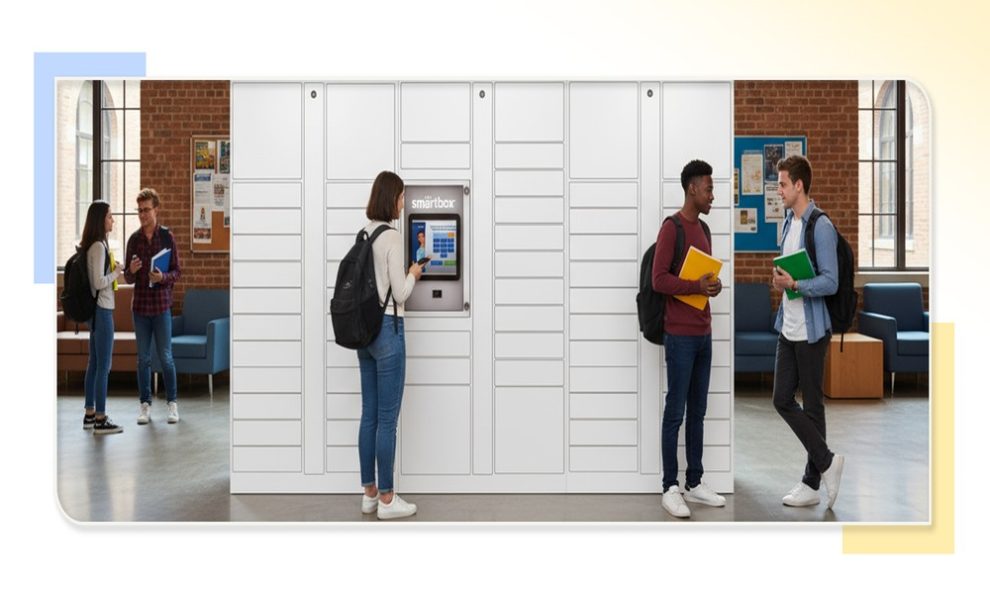

School locker design carries security implications that administrators, security consultants, and facilities teams routinely underweight when treating specification as a storage capacity decision. The configuration, ventilation pattern, and lock technology of locker systems each affect security monitoring, contraband detection, and access control in ways documented in school safety literature.
How Does Locker Configuration Affect Security Monitoring?
Locker configurations that create concealed alcoves or visually screened areas complicate security monitoring. Freestanding locker units placed perpendicular to corridors, common in older school construction, create 2 security vulnerabilities:
- Sight-line blockages that corridor supervision protocols cannot address without additional staffing
- Recessed concealment areas where student interactions are not visible from the corridor axis
National Institute of Justice school security design standards recommend corridor-integrated locker configurations that maintain continuous sight lines along the corridor axis, with locker bank depths that do not project beyond the corridor wall plane.
How Do Ventilation Openings Affect Contraband Detection?
Locker ventilation patterns affect the effectiveness of 2 passive security monitoring methods:
- Visual inspection: larger and more numerous openings increase the area visible without opening individual lockers
- Scent detection: higher ventilation area improves the effectiveness of canine detection during routine corridor monitoring
School administrators specifying school lockers for security-oriented renovation programs should consult with the district’s security coordinator on ventilation opening specifications before finalizing locker door designs.
Which Lock Technology Best Supports School Security Administration?
Three lock technology options present different administrative trade-offs for school security:
- Keyed locks: require key management protocols and duplication security that most school facilities cannot maintain reliably
- Combination dial locks: require regular reset capability but generate no access log data
- Electronic locks: integrate with school access control databases, allow remote access grant and revoke, and generate access logs for targeted searches
The capital cost premium of electronic systems over mechanical locks is typically recovered within 3 to 5 years in facilities with high locker tampering rates.
What ADA Requirements Apply to School Locker Specifications?
Federal and state accessibility requirements mandate accessible locker provisions with 2 compliance requirements that are frequently missed:
- Operable parts at reach heights between 15 and 48 inches above the finished floor for forward reach
- Lock mechanisms that meet ADA operability requirements without tight grasping, pinching, or twisting
Schools that fail to incorporate accessible locker provisions during renovation face both federal compliance exposure and the practical challenge of accommodating disabled students with non-compliant assigned lockers.