
There is a particular quality of engagement that music brings to a child’s development that other extracurricular activities rarely match. Learning an instrument requires simultaneous use of both hands in different patterns, reading notation, listening critically, and managing the physical demands of the instrument, all at once. Music lessons develop cognitive coordination that researchers have consistently linked to improved performance in mathematics, language processing, and sustained attention.
For adults, the case for music lessons is different but equally compelling. Learning an instrument as an adult is one of the few activities that actively builds new neural pathways in mature brains. The challenge of acquiring a new motor skill, combined with the intellectual engagement of learning notation and music theory, provides the kind of cognitive exercise that contributes to mental sharpness across decades.
What a Well-Structured Music School Provides
The difference between good music education and poor music education is visible in what happens after the lesson. Students from a well-structured programme practise with intention because they understand what they are working on and why. Students from a poorly structured programme practise mechanically, repeating the same mistakes until they become habits.
Harmony & Pitch’s approach to music lessons centres on the quality of the instructional relationship between teacher and student. Every teacher on the faculty holds formal music qualifications. Every lesson ends with a clear, specific practice brief that tells the student exactly what to work on before the next session. Progress is monitored against defined milestones, so both the teacher and the parent or adult learner can see development over time.
Music lessons at Harmony & Pitch cover piano, violin, guitar, ukulele, and other instruments, with programmes structured for different age groups and learning goals.
Choosing the Right Instrument
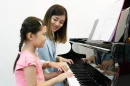
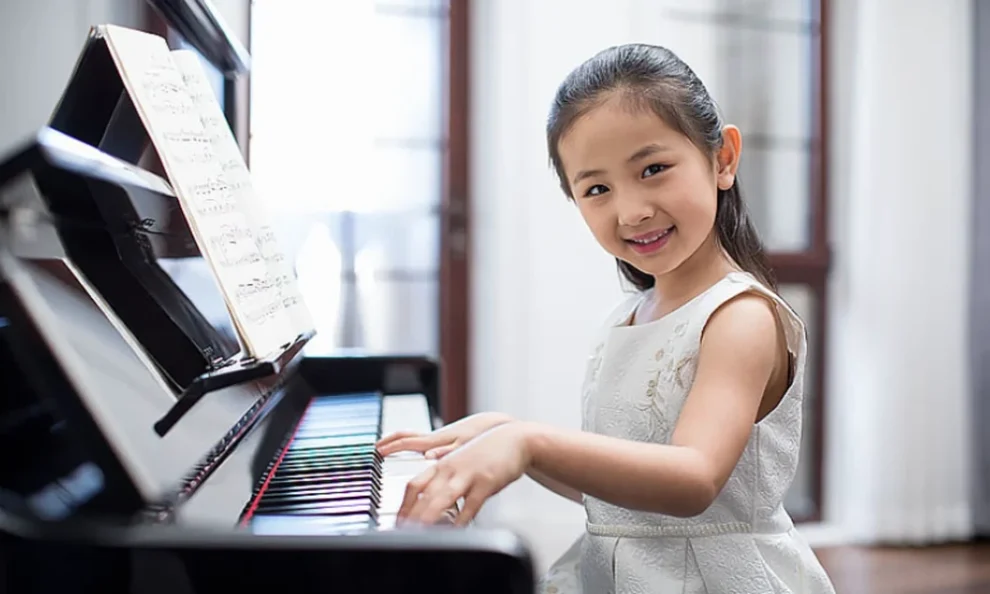
The first decision for a new music student is instrument selection. For children under seven, piano and ukulele are typically the most accessible starting points. Piano allows the student to see all the notes laid out in front of them, making pitch relationships visually concrete. Ukulele is light, physically undemanding for small hands, and produces recognisable music quickly.
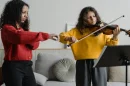
Violin is appropriate from around five or six, though the early progress requires particular patience from both student and parent. Guitar becomes practical from around seven to eight for most children. Wind instruments generally suit slightly older beginners.
For adults, the choice of instrument is usually driven by a specific musical goal. Adults who want to play a particular style of music should choose the instrument most associated with that style, because the motivation of playing the music they love sustains the practice through the challenging early stages.
The Role of Theory in Practical Lessons
Music theory is often treated as a separate subject, taught in isolation from instrument practice. Harmony & Pitch integrates theory into practical lessons because the two reinforce each other. A student who understands why a particular fingering produces a particular sound learns the technical material faster and retains it more reliably.
Theory at beginner level covers rhythmic notation, pitch reading, and basic musical terms. At intermediate level, it includes key signatures, intervals, and harmonic understanding. At advanced levels, theory encompasses counterpoint, analysis, and the deeper structural understanding that informs interpretive decisions in performance.
Recitals and Performance Opportunities
Performance is an important component of music education that goes beyond the technical skills of playing an instrument. Managing the psychological experience of performing in front of others, projecting music with confidence and intention, and receiving feedback on a performance develop attributes that transfer across many areas of life.
Harmony & Pitch organises regular student recitals that provide performance opportunities for students at all levels. These events are designed to be supportive rather than competitive, focusing on the student’s individual development rather than comparison with peers.
Getting Started
The first step for families or adults considering music tuition in Singapore is a consultation with a teacher or school coordinator. This conversation establishes the student’s current level, their goals, the appropriate instrument and programme, and the scheduling options available.
Trial lessons, where offered, are valuable for confirming that the teacher-student relationship is a good fit. The relationship between a student and their music teacher is one of the most important factors in long-term progress, and investing a little time in finding the right match pays dividends across years of learning.
For children and adults across Singapore who are ready to begin or continue their musical journey, music lessons at Harmony & Pitch provide the structured instruction, qualified faculty, and genuinely supportive environment that makes music learning one of the most rewarding investments in personal development available.